How Gambling Culture Differs Across European Countries
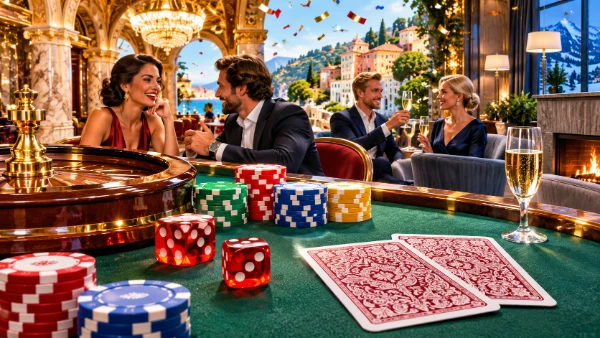
Gambling in Europe reflects centuries of local traditions, social customs, economic development and changing attitudes towards personal risk. In Spain, buying a Christmas lottery ticket is a familiar festive tradition, while British gambling culture has strong historical connections with horse racing and football. France maintains a clear distinction between traditional casinos and permitted forms of online gambling, whereas Scandinavian countries place considerable emphasis on consumer protection. As of November 2026, these differences remain significant despite the widespread availability of digital gambling services. Understanding European gambling culture therefore requires looking beyond national legislation and considering how people perceive gambling, which activities form part of their everyday lives and how governments balance commercial interests with public health concerns.
Historical Traditions and Social Attitudes Towards Gambling in Europe
European gambling traditions developed long before the emergence of online casinos and modern betting shops. Card games, lotteries, horse racing and informal wagers were familiar activities across numerous European societies for centuries. However, their social significance varied considerably. Gambling establishments in certain countries became associated with wealthy visitors, fashionable resorts and exclusive entertainment, while elsewhere gambling developed around inexpensive lottery tickets, local sporting competitions and community gatherings. These historical differences continue to influence public perceptions, even where contemporary gambling services offer similar games.
Italy occupies a particularly important place in European casino history. The Ridotto, established in Venice in 1638, is commonly recognised as one of the earliest government-authorised public gambling houses. Its establishment illustrates the longstanding Italian approach of permitting gambling within a controlled environment rather than attempting to eliminate it entirely. Traditional card games such as Scopa and Briscola also remain familiar elements of Italian social life, although playing these games does not necessarily involve wagering money. Alongside regulated commercial gambling, such traditions demonstrate the distinction between recreational gaming and financial risk.
In France and Monaco, the development of casino culture was closely connected with tourism, hospitality and prestigious holiday destinations. Monte Carlo acquired an international reputation through its historic casino, while French establishments developed in seaside resorts, spa towns and other tourist centres. Casino visits consequently became associated with a broader leisure experience involving restaurants, hotels and entertainment. This differs from countries where gambling primarily developed through neighbourhood betting shops or national lotteries. Nevertheless, the historical glamour of casino establishments should not obscure the financial risks associated with their games.
Lotteries and Community Gambling in Southern Europe
Spain provides one of the clearest examples of gambling becoming incorporated into a national cultural tradition. The country’s Christmas lottery, officially known as the Sorteo Extraordinario de Navidad, dates back to 1812. Its principal prize is popularly called El Gordo. Rather than purchasing an entire ticket, many participants buy a décimo, representing one tenth of a ticket, or share participation with relatives, friends and colleagues. The annual draw on 22 December has become a recognisable part of the Spanish festive calendar, with extensive media coverage and celebrations in communities where winning tickets have been sold.
Portugal has its own longstanding lottery tradition through Jogos Santa Casa, operated by Santa Casa da Misericórdia de Lisboa. The organisation’s activities connect gambling with the financing of social causes and public-interest programmes. Traditional lottery products, scratchcards known locally as raspadinhas, and participation in EuroMillions occupy a visible place in Portuguese retail environments. The association between lottery revenue and social welfare can influence how gambling is perceived, although the charitable destination of part of the proceeds does not remove the possibility of financial harm to individual participants.
Italy similarly maintains a strong connection with traditional number-based gambling through Lotto and SuperEnalotto. In Naples, the historical tradition of La Smorfia associates dreams, everyday situations and symbolic images with numbers. Some people use these associations when selecting lottery numbers, reflecting a cultural practice that combines folklore with games of chance. Such customs distinguish Italian lottery culture from more commercially focused gambling activities. They also demonstrate how beliefs and inherited traditions can influence gambling decisions, despite having no effect on the mathematical probability of winning a random draw.
Gambling Preferences in Western, Central and Northern Europe
British gambling culture is characterised by the coexistence of national lotteries, betting shops, horse racing, bingo halls and licensed online casinos. Events such as the Grand National and the Cheltenham Festival have longstanding connections with betting, while football provides a regular subject for sports wagering throughout the year. Nevertheless, national participation figures demonstrate that gambling culture in Great Britain extends far beyond sports betting. According to the Gambling Commission’s survey published on 17 September 2026, 49% of adults reported gambling during the preceding four weeks. When people who participated exclusively in lottery draws were excluded, the proportion fell to 28%.
France presents a different combination of gambling preferences and regulatory boundaries. Horse racing remains connected with the country’s equestrian heritage through pari-mutuel betting, traditionally associated with PMU. Football dominates online sports wagering, while tennis also generates substantial activity. According to the Autorité nationale des jeux, France recorded €14.1 billion in gross gambling revenue during 2025. Online sports betting generated approximately €1.77 billion of this total. These figures illustrate the commercial significance of sports wagering, although traditional lotteries and physical gambling establishments continue to occupy important positions in French society.
Germany has developed a gambling culture encompassing regional lotteries, sports betting, traditional Spielbanken and amusement arcades containing gambling machines. Historic casinos in towns such as Baden-Baden reflect the country’s association between gambling, tourism and hospitality. Meanwhile, the nationwide regulatory framework introduced under the Interstate Treaty on Gambling in 2021 established new arrangements for several forms of online gambling. German consumers therefore encounter gambling through both traditional establishments and digital services, with relatively extensive regulatory intervention shaping how commercial gambling operates.
The Scandinavian Approach to Gambling and Public Responsibility
Sweden has historically maintained a close relationship between gambling regulation and public-interest objectives. The introduction of a competitive licensing system in January 2019 changed the structure of its commercial gambling market, allowing private operators to obtain licences under national requirements. Svenska Spel nevertheless remains an important state-owned gambling company. Swedish gambling culture consequently combines commercial competition with established expectations concerning consumer protection, public accountability and the prevention of excessive gambling. The national discussion extends beyond whether gambling should be available and considers the responsibilities of companies offering it.
Denmark follows a comparable approach, although its competitive licensing system for online casinos and sports betting was introduced in 2012. Danske Spil maintains a prominent historical position, while privately operated gambling businesses coexist within a regulated market. Danish authorities provide centralised consumer protection services, including the ROFUS self-exclusion register and the confidential StopSpillet helpline. These services reflect an institutional approach in which gambling-related difficulties are recognised as legitimate concerns requiring accessible support rather than being treated exclusively as matters of individual responsibility.
Norway provides a notable contrast with its more restrictive exclusive-rights model. Norsk Tipping and Norsk Rikstoto occupy central positions within the authorised gambling market, with revenue distribution connected to designated public-interest purposes, including sporting and voluntary activities. The Norwegian approach places greater emphasis on limiting commercial gambling availability than the competitive licensing systems operating in Sweden and Denmark. These differences demonstrate that even neighbouring countries with comparable social institutions can develop substantially different approaches to gambling regulation, commercial competition and the distribution of gambling proceeds.

How Regulation and Digital Gambling Shape European Culture in 2026
Europe does not have a single gambling licence that automatically authorises an operator to provide services throughout the continent. National governments maintain distinct requirements concerning permitted games, licensing, advertising, taxation and consumer protection. An online casino operating legally in one European jurisdiction may therefore be prohibited from offering equivalent services in another. France, for example, permits licensed online sports betting, horse racing betting and poker alongside authorised lottery services, but does not maintain an ordinary licensing regime for online slots and casino table games. This distinction remains fundamental to understanding the French gambling environment.
Digital gambling has changed the relationship between gambling and everyday activities. A lottery purchase, sports wager or casino session no longer necessarily requires visiting a physical establishment. However, greater accessibility does not mean that national gambling habits have become identical. The French gambling regulator reported that competitive online gambling generated approximately €1.45 billion in gross revenue during the first half of 2026, representing an increase of 11% compared with the corresponding period in 2025. Sports betting remained the principal contributor, with wagering activity increasing substantially during June as the football World Cup began.
Advertising restrictions also contribute to differences in gambling visibility. Italy introduced a broad prohibition on gambling advertising and sponsorship through its 2018 Dignity Decree. Other European jurisdictions have developed their own restrictions concerning television commercials, sporting sponsorship, promotional communications and advertising directed towards vulnerable audiences. These measures influence the frequency with which people encounter gambling-related messages. They also reflect broader disagreements about whether commercial gambling should be treated as an ordinary leisure product or as a potentially harmful activity requiring exceptional advertising restrictions.
Responsible Gambling, Social Expectations and Cultural Differences
Consumer protection arrangements increasingly distinguish European gambling markets. Sweden operates the national Spelpaus self-exclusion system, while Denmark maintains ROFUS. The Danish register allows individuals to request a 24-hour break, exclusion for one, three or six months, or permanent exclusion from covered gambling services. Great Britain operates GAMSTOP for licensed online gambling businesses. These arrangements reduce reliance on separate exclusion requests to individual operators, although their precise coverage differs between countries and they cannot guarantee protection from unauthorised gambling services.
Germany applies additional restrictions intended to reduce excessive expenditure. Under its interstate regulatory framework, a standard monthly deposit limit of €1,000 applies across covered online gambling operators, subject to legally permitted exceptions. The distinction between deposits and actual gambling losses is important: a deposit limit restricts the amount transferred into gambling accounts but does not establish an amount that is financially safe for an individual. National requirements concerning gambling sessions, identity verification and expenditure demonstrate how consumer protection can become an integral part of the everyday gambling experience.
European gambling culture in 2026 remains shaped by the interaction of historical customs, commercial availability, sporting interests and public policy. Spanish Christmas lottery traditions, British horse racing, Italian numerical folklore, French pari-mutuel betting and Scandinavian protection systems illustrate different relationships between gambling and society. However, these national characteristics should not be mistaken for universal personal preferences or evidence that one population gambles more responsibly than another. Such comparisons require compatible research methods and reliable participation data. Regardless of cultural setting, gambling involves financial risk, and its acceptance as a social tradition does not make participation necessary or guarantee favourable outcomes.